









Exhibits › Eclectic › Homage to Giacometti
Homage to Alberto Giacometti: Artist of Post-War Angst and the Human Condition
I first became aware of Giacometti when I was 13 years old in 1963.
My father took me to a major exhibit of the artist’s work at the Art Institute of Chicago. The gaunt, alienated, and minimalist sculpture and paintings stood in stark contrast to the prosperous and stable American Midwest society at mid-century.
I was literally stunned by the images. But also morbidly fascinated. As an elementary school student, I had been doing “duck and cover” drills for years. Even as naive and sheltered kid, I knew that hiding crouched under a desk would not save me from an atomic bomb blast.
Chicago at the time was a haven for both Jewish emigre’ artists and scholars, and survivors of the Nazi death camps in Europe. Some of my friends’ parents had numbers tattooed on their forearms. I remember their homes with drapes always covering the windows and their foreign accents. Although the Holocaust was never really discussed publicly at the time, it was part of the silent Jewish American consciousness.
I knew that young Jewish children and young people like myself were murdered by the Germans and other Europeans. I was viscerally relieved and grateful to be an American (still am).
There was an underlying shadow of anxiety in the U.S. that would breakout into the open in 1968 and create a ongoing malaise that has continued for decades.
Presently, as a 76-year-old American Jew, I still feel both the precariousness and positive prospects for the human condition in the 21st century. Still, there are many threats to civilization that include nuclear proliferation, climate change, pollution of the sea and air, bio-warfare, neo-Nazis and fanatical Islamic jihadists, and global antisemitism, to name some the most obvious dangers.
Giacometti’s vision is still relevant to me and perhaps to every inhabitant on this blue dot of a planet.
Here is some basic information on the artist gleaned from the web:
Alberto Giacometti (1901–1966) was a Swiss sculptor, painter, and draughtsman whose work is defining of 20th-century art, primarily known for his post-war figures that embody existentialist themes of alienation, anxiety, and the fragility of human existence. His artistic journey moved from early Surrealist, dream-like objects to a lifelong obsession with representing human figures reduced to their absolute essence—emaciated, tall, and thin; often described as “stalk-like” or appearing at a great distance
Key Insights and Themes
- The Existentialist Human Condition: Giacometti’s post-WWII work is strongly associated with existentialism. His figures, often alone or in small groups, embody a sense of post-war trauma, loneliness, and the struggle to find meaning in a void.
- Sculpting Space and Distance: He believed the void around a figure was just as significant as the figure itself. By whittling his sculptures down to thin, delicate forms, he aimed to recreate the sensation of seeing someone from a great distance.
- The “Head” as the Center of Being: Giacometti was fixated on the human head, believing the essence of a person—their life and conscious reality—lies within their eyes and gaze.
- Persistent Searching/Reworking: His work was never truly finished. He often reworked his sculptures and paintings, constantly revising them until the final form was almost a “skeleton” of his original vision.
- Surrealist Beginnings (1930s): Before his signature thin figures, he was a key figure in the Surrealist movement, producing objects that blended sexuality, trauma, and dreamlike themes.
Wonderful short YouTube video:
Alberto Giacometti: A new way of thinking about humanity produced by The Tate (museums) 3:51
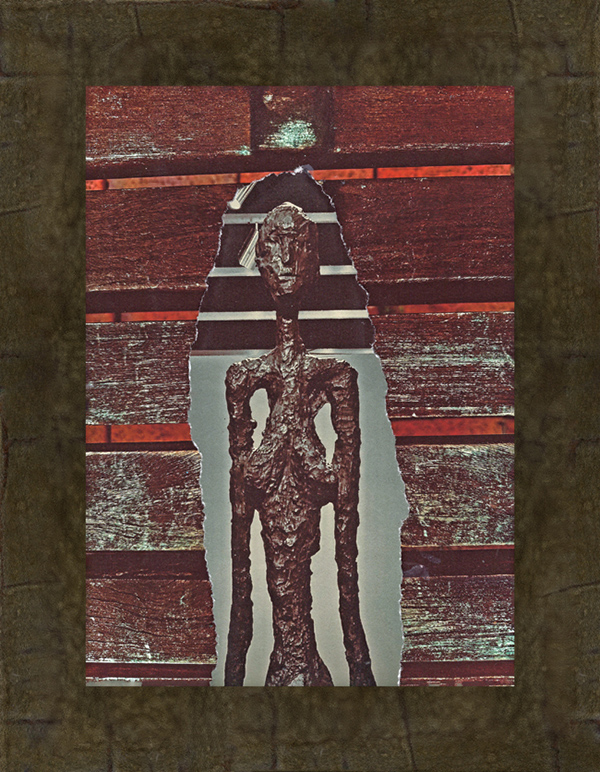
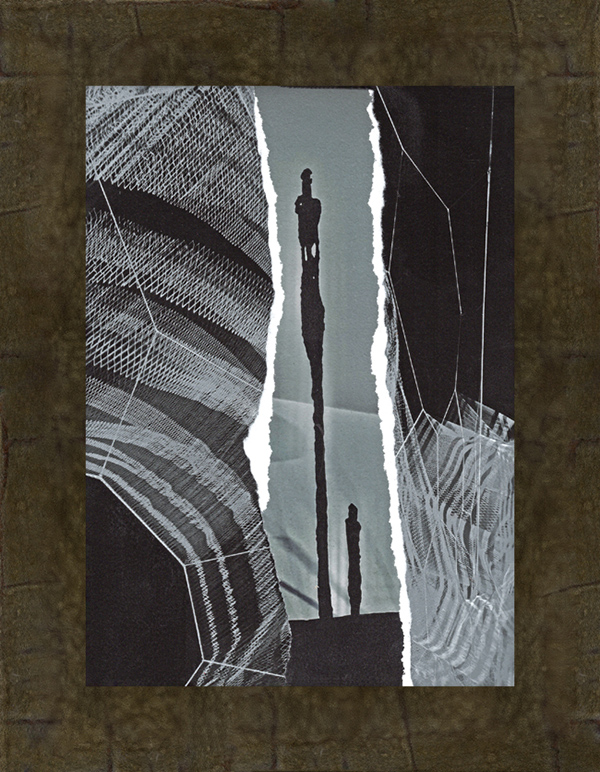
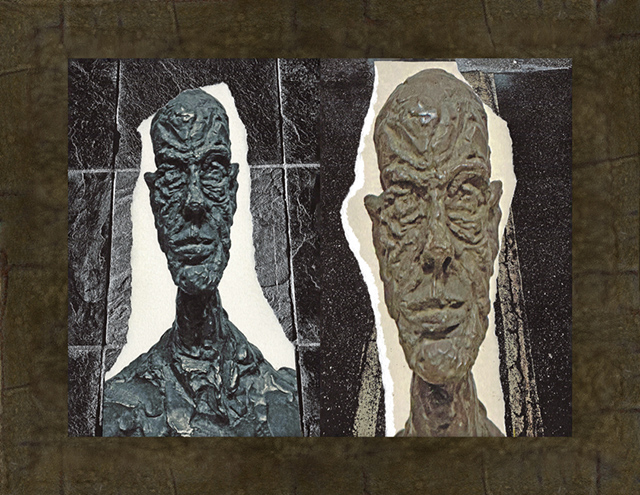
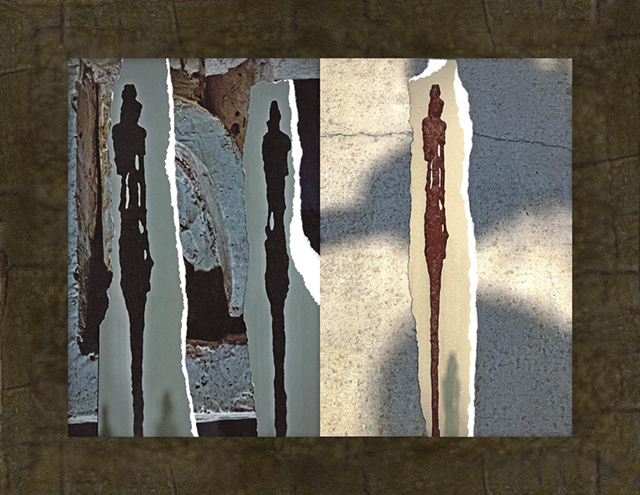
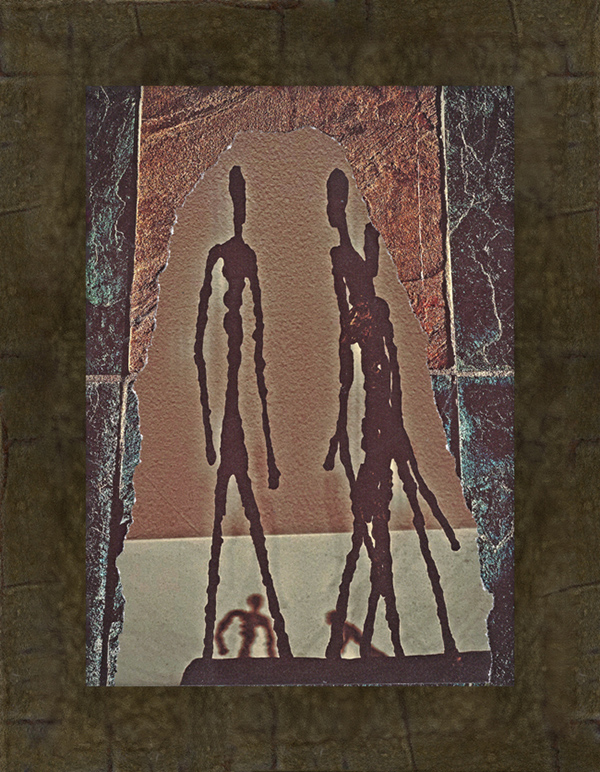
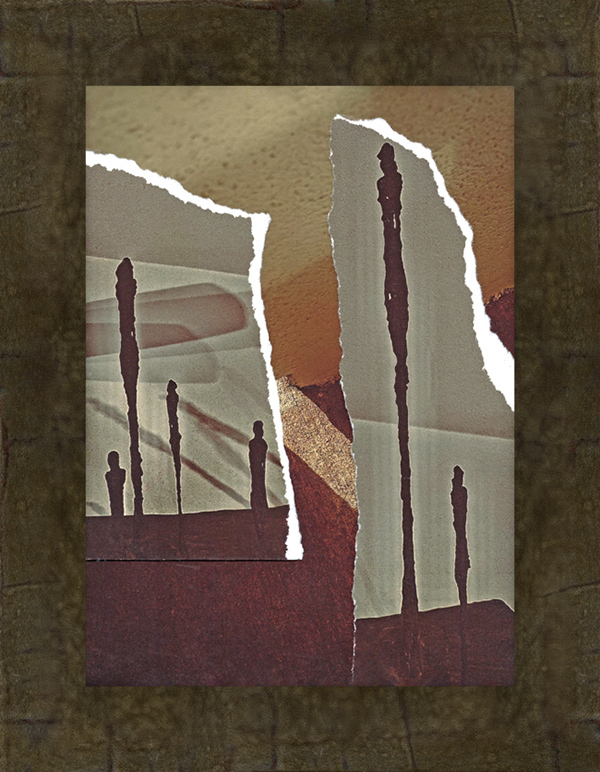
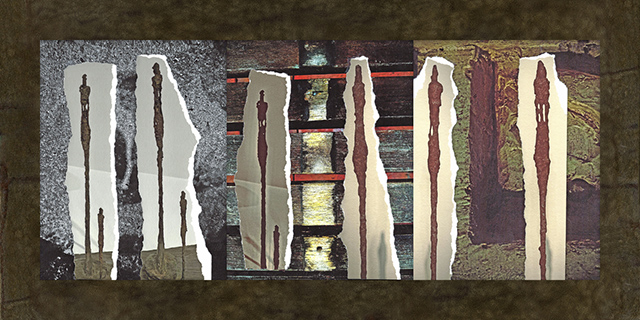
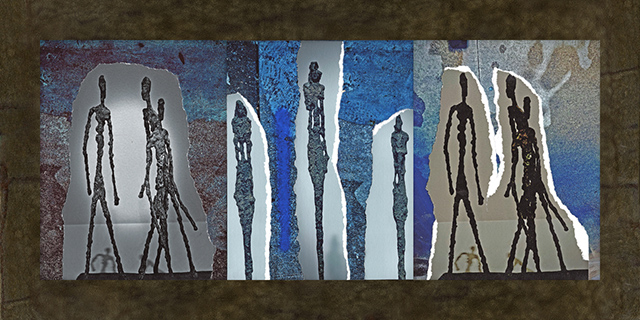
Technical Notes About the Collages
Gallery visitors at the Dalí Museum in St. Petersburg, Florida are encouraged to use their cell phone cameras without flash to both document and post their visual impressions of the show.
https://thedali.org/exhibit/alberto-giacometti-and-salvador-dali/
I used my iPhone with special effects functions to create unique digital images that were then printed on archival paper with archival pigmented inks. Acid-free dry and liquid adhesives were used to adhere collage elements. All the artworks are either 5x7 inches or 8.5x11 inches.
Perhaps one of the greatest compliments one artist can give another is to incorporate a master’s vision into one’s humble creative efforts.
Contact Bob Barancik
email: bobcreates@earthlink.net
cell+text: 215.964.3937